
The National Council for Human Rights participated in the conference of the Global Academy for Women Leaders in the Digital Age, held in Morocco.
El Gisr – Exclusive – Morocco
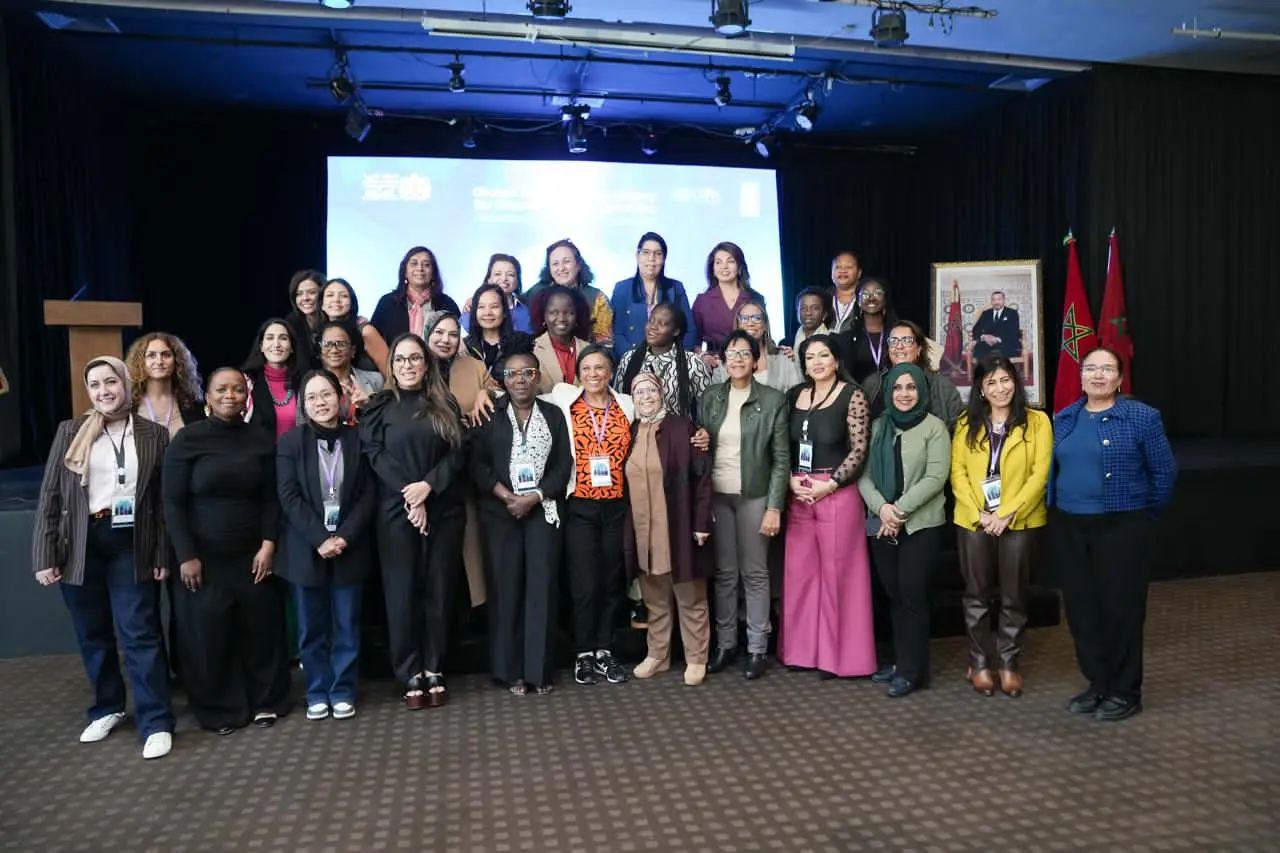
The National Council for Human Rights participated in the 2025 conference of the Global Academy for Women Leaders in the Digital Age, held in Morocco and organized by the United Nations through the UN Development Programme (UNDP) in partnership with UNEAD, for the third consecutive year. The conference brought together a distinguished group of women leaders from around the world. Samira Louka, a member of the National Council for Human Rights, represented the Council at the event.
About 60 women leaders from diverse cultural and professional backgrounds attended the conference, part of a pioneering UN initiative aimed at preparing female leaders capable of navigating rapid digital transformations and building future leadership models based on inclusion, integrity, and good governance.
The conference focused on key human rights issues in the digital space, including the digital divide, technology-based violence, cybersecurity risks, the spread of misinformation, and the impact of digital transformation on political participation, women’s empowerment, and protection. Discussions highlighted that the misuse of technology poses a major obstacle to women attaining leadership roles through practices such as defamation, cyber-extortion, privacy violations, and creating unsafe digital environments.
Samira Louka emphasized that the Council’s participation reflects its commitment to linking human rights issues with digital transformation and defending women’s right to safe and active participation in public life. She stressed that digital empowerment cannot be achieved without real cybersecurity protections and comprehensive legal and technological awareness.
During her participation, Louka proposed establishing a national academy for women leaders in Egypt under the National Council for Human Rights, leveraging artificial intelligence (AI) technologies. The academy aims to train digitally qualified female cadres capable of addressing technological challenges and enhancing women’s presence in decision-making positions.
She concluded by affirming that founding such an academy represents a strategic step toward secure and sustainable digital empowerment for Egyptian women and reflects Egypt’s commitment to advancing women’s rights and ensuring inclusivity in national policies in the context of digital transformation.