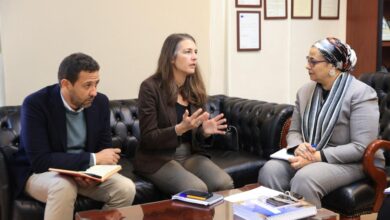

“National Council for Childhood and Motherhood” Affirms Its Rejection of Exploiting Children in Inappropriate Media Contexts
Dr. Sahar El-Senbati: Associating Children with Adult Concepts Poses a Societal Risk and Contradicts the Best Interests of the Child
Al-Gisr – Exclusive
The National Council for Childhood and Motherhood expressed deep concern over promotional advertisements for an episode of the program “For Dating”, scheduled to air this evening, which feature two children in a format mimicking a dating show intended for adults.
Dr. Sahar El-Senbati, Chairperson of the Council, emphasized that simply using the title “Dating” and linking it to children, while placing them in this production format, represents a dangerous precedent that seeks to normalize adult social concepts for children—even if the dialogue appears entertaining or comedic.
El-Senbati pointed out that the danger lies in the context in which children are placed, exploiting their innocence to create clickbait content under the guise of a dating theme, which conflicts with the best interests of the child and may encourage imitative or inappropriate behaviors among children.
The Council strongly rejects the promotion of an episode featuring children in a dating show context, as it contains concepts completely unsuitable for children’s age or for child protection standards.
Immediately, El-Senbati instructed the Council to contact the Public Prosecution Office – Child, Persons with Disabilities, and Elderly Protection Unit, as well as the National Media Authority, to take the necessary legal measures regarding this matter. She stressed the importance of media outlets adhering to the Media Code of Conduct, and professional and ethical standards when presenting any content involving children.
Sabry Osman, Director General of the Child Helpline, stated that exploiting children in commercial media contexts without considering the psychological and educational impact on them or their peers could constitute legal liability under the Egyptian Constitution and laws, which prohibit endangering a child’s morals or exploiting them commercially.
The Council reaffirmed its commitment to monitoring and coordinating with relevant authorities to ensure that children are not exploited in any inappropriate media content.
The Council also commended the pivotal roles played by the Public Prosecution Office – Child, Persons with Disabilities, and Elderly Protection Unit and the National Media Authority in enforcing the law, regulating media content in compliance with the Constitution and laws, and upholding the professional code of conduct and public ethics.