
Counselor Amal Ammar Receives Director of the Cooperation Office with the French Development Agency in Egypt
Al-Gisr – Exclusive
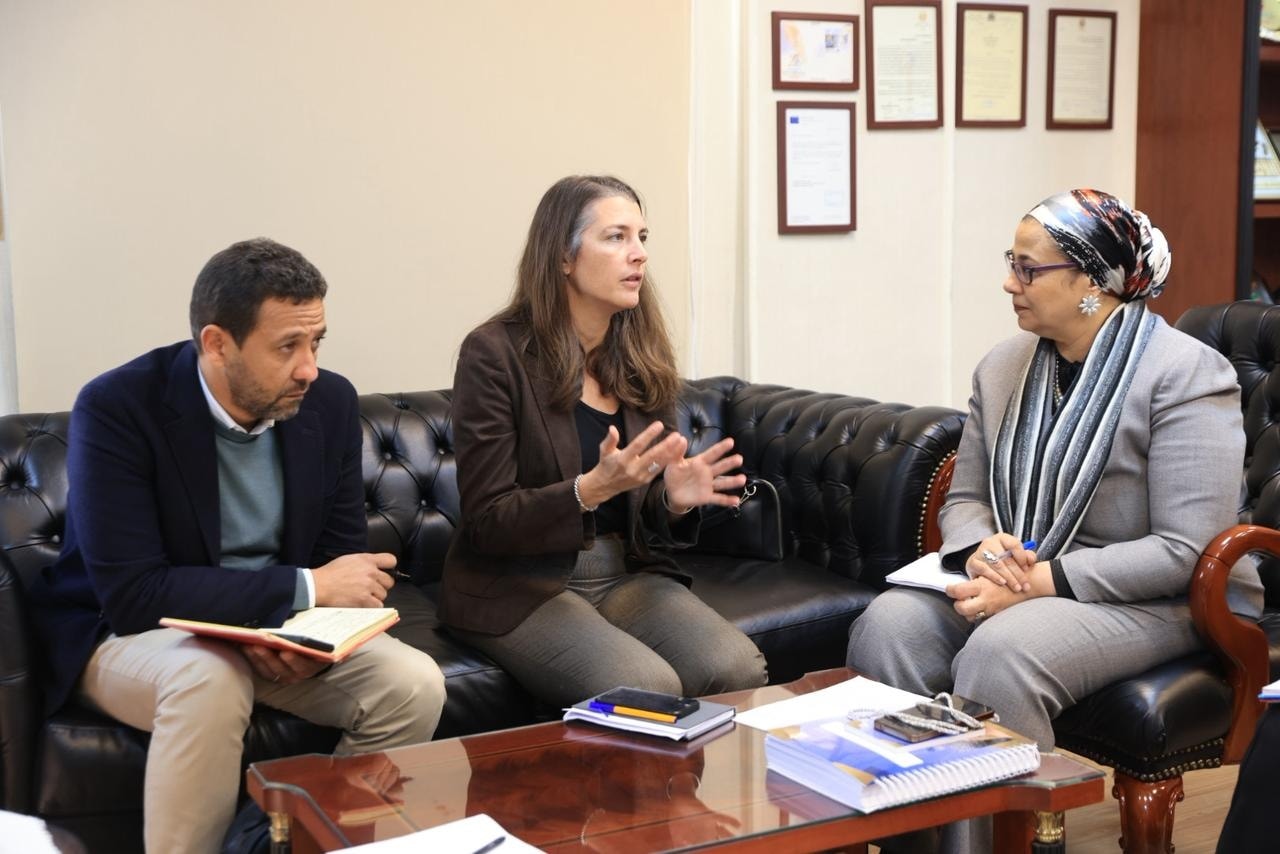
Counselor Amal Ammar, Chairperson of the National Council for Women, received Clémence Vidal de la Blache, Director of the Cooperation Office with the French Development Agency (AFD) in Egypt, and Mohamed Fanjari, Head of the Urban Development and Transport Unit at the Agency, to discuss ways to enhance joint cooperation and expand partnership areas in the upcoming period.
The meeting was attended by Safaa Habib, Head of the Protocol and Media Department, and Sherwit Ibrahim, Director General of International Cooperation at the Council.
During the meeting, Counselor Amal Ammar highlighted the Council’s efforts in empowering Egyptian women across various sectors and its role in integrating women’s needs into development policies and programs, contributing to the achievement of the Sustainable Development Goals.
The discussion included an update on the implementation of the Raml Tram Rehabilitation Project in Alexandria, the Urban Transport Project, and ways to strengthen gender equality within the transport system, emphasizing the importance of integrating women’s issues into this vital sector.
The meeting also addressed the importance of awareness regarding the Code of Conduct for the Transport System, which is the first of its kind to consider women’s issues, thereby promoting values of integrity, equality, and professional commitment within the transport sector.
Both parties exchanged views on mechanisms for developing bilateral cooperation, stressing the importance of sharing expertise and expanding areas of joint work in the future, in support of the state’s efforts to achieve sustainable development and women’s empowerment.