

Prime Minister Chairs Meeting of the Ministerial Committee for Social Justice
Automatic Registration of Groups Listed in the Databases of Cash and Social Support Programs (such as Takaful and Karama) under the Comprehensive Health Insurance System
El Gisr – Exclusive
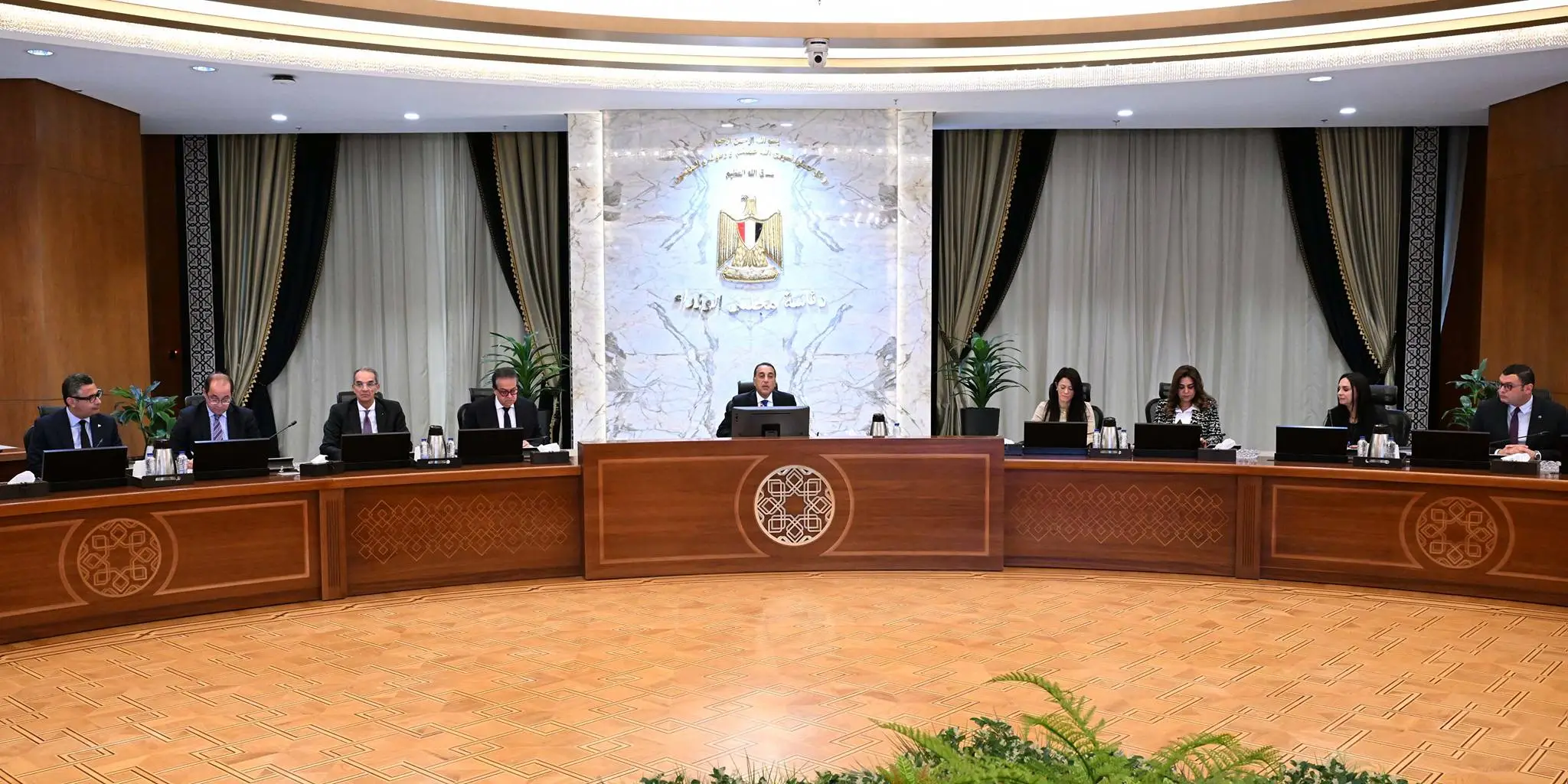
Dr. Mostafa Madbouly, Prime Minister, chaired today the meeting of the Ministerial Committee for Social Justice, in the presence of Dr. Khaled Abdel Ghaffar, Deputy Prime Minister for Human Development and Minister of Health and Population; Dr. Rania Al-Mashat, Minister of Planning, Economic Development, and International Cooperation; Dr. Amr Talaat, Minister of Communications and Information Technology; Dr. Manal Awad, Minister of Local Development and Acting Minister of Environment; Mr. Ahmed Kouchouk, Minister of Finance; Dr. Maya Morsy, Minister of Social Solidarity; Dr. Sherif Farouk, Minister of Supply and Internal Trade; Eng. Sherif Sherbini, Minister of Housing, Utilities, and Urban Communities; Mr. Alaa El-Din Farouk, Minister of Agriculture and Land Reclamation; Mr. Mohamed Gibran, Minister of Manpower; Mr. Mohamed Abdel Latif, Minister of Education and Technical Education; along with officials from relevant ministries and authorities.
At the start of the meeting, the Prime Minister reiterated that the state views the social support system as a vital file directly affecting citizens’ lives. He emphasized that the government aims to achieve the highest levels of social justice through coordinated efforts between ministries and relevant bodies, enhancing public expenditure efficiency while considering various economic and social dimensions.
Dr. Madbouly stated that the meeting comes in light of the government’s interest in strengthening the social protection system for targeted groups, relying on accurate and comprehensive databases as well as thorough technical, economic, and social studies to ensure well-informed and balanced decisions that serve both citizens and the state.
He further explained that the government is focused on expanding social protection services and improving support programs, ensuring that aid reaches its rightful beneficiaries, with particular attention given to low-income groups and the provision of protective programs that guarantee a “decent life.”
The official spokesperson for the Prime Minister, Counselor Mohamed El-Homsany, noted that the meeting addressed updates on developing the social support system and ongoing efforts to enhance targeting efficiency, achieve social justice, and ensure that aid reaches those who need it most.
The spokesperson added that the meeting highlighted the decision to automatically register groups listed in the databases of cash and social support programs administered by the Ministry of Social Solidarity (such as Takaful and Karama) into the comprehensive health insurance system. The Ministry of Social Solidarity is tasked with providing updated data on low-income groups to the General Authority for Universal Health Insurance on a regular basis, ensuring that high-quality healthcare services are delivered to the most vulnerable citizens under the protective programs.
The meeting also stressed the importance of support programs for middle-income groups to help them cope with the burdens caused by successive crises over recent years.
Additionally, the meeting reviewed the results of the first phase of implementing the Unified Government Services Card. It was noted that the card has been in use for distributing subsidized goods and bread in Port Said Governorate, which serves as a model for the system since April 2025, benefiting approximately 41,500 subsidized families. Progress on the “Beneficiary Data Update Form” was also presented, as a preparatory step for gradual nationwide implementation to unify databases and strengthen governance of the support system.
The current status of data auditing and cleaning efforts for beneficiaries of the subsidized goods and bread systems was reviewed, highlighting its central role in developing the system.
At the same time, the meeting emphasized the need to continue fully digitizing the support system to maintain an up-to-date database. This allows for improved planning of aid distribution and enables the unified card to include new eligible individuals or households more easily, thereby expanding support for the most needy families within the protective framework.

